MEPCO MIS – Complete Guide to the MEPCO Management Information System
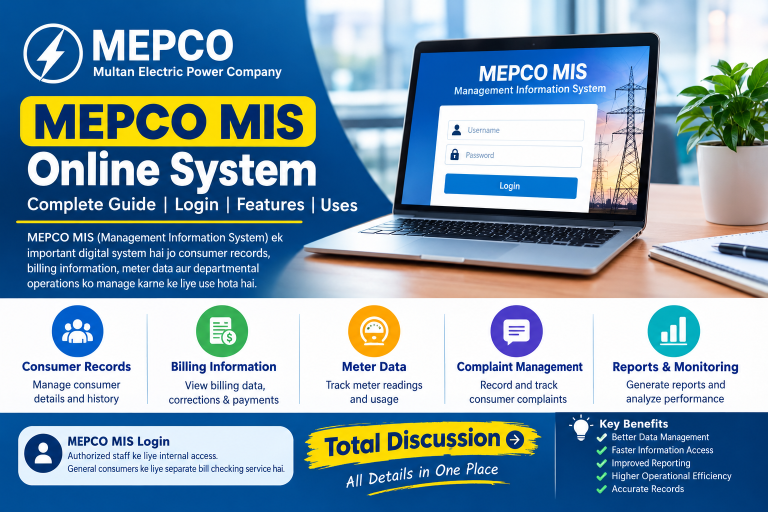
MEPCO MIS is an important term related to information management, billing operations, performance monitoring, and administrative systems within Multan Electric Power Company (MEPCO).
The term MIS stands for Management Information System. In simple words, a Management Information System helps an organization collect, organize, process, analyze, and use information for better management and decision-making.999SX
For a large electricity distribution company such as MEPCO, thousands or millions of operational records may be generated through consumer connections, electricity billing, meter readings, payments, recoveries, complaints, and other administrative activities. A properly managed information system helps organize this data and convert it into useful information.
This complete guide explains what MEPCO MIS is, how management information systems work, their possible role in billing and recovery operations, the difference between internal systems and public consumer services, and the importance of digital information management in the electricity sector.
What Is MEPCO MIS?
MEPCO MIS refers to the Management Information System environment associated with the management and operational information needs of Multan Electric Power Company.
An MIS is designed to help an organization manage information efficiently. Instead of relying entirely on manually prepared reports, an information system can collect data from different operational areas and organize it into useful reports.
In an electricity distribution environment, the information may relate to:
- Consumer records
- Electricity connections
- Meter reading information
- Electricity consumption
- Monthly billing
- Bill payments
- Outstanding amounts
- Recovery performance
- Defaulter information
- Distribution losses
- Customer complaints
- Operational performance
- Administrative records
- Departmental reports
The main purpose is to make information easier to manage and use for operational monitoring and management decisions.
What Does MIS Stand For?
MIS stands for:
Management Information System
It is a system used to collect, process, store, organize, and present information.
The information generated through an MIS can help managers and authorized departments understand the performance of different operations.
For example, management may need to know:
- How many consumers were billed this month?
- What is the total billing amount?
- How much revenue has been collected?
- Which areas have high outstanding amounts?
- Where are electricity losses higher?
- Which operational areas require additional attention?
Instead of manually collecting information from multiple departments, an MIS can help organize this information into reports and performance indicators.
Why Is MEPCO MIS Important?
MEPCO operates in a large electricity distribution environment where a significant amount of information is generated regularly.
Managing this information efficiently is important for:
- Operational planning
- Billing monitoring
- Revenue management
- Recovery monitoring
- Performance analysis
- Consumer record management
- Complaint monitoring
- Administrative reporting
- Decision-making
Without proper information management, it can become difficult for a large organization to monitor all operational activities effectively.
An MIS helps convert raw data into useful information.
How Does MEPCO MIS Work?
The general process of a Management Information System can be understood in several stages.
1. Data Collection
The first step is collecting information from different operational sources.
In an electricity distribution environment, this may include:
- Consumer information
- Meter reading data
- Electricity consumption
- Billing information
- Payment records
- Recovery data
- Outstanding amounts
- Complaint records
- Departmental information
The collected information becomes the foundation for reporting and analysis.
2. Data Processing
Raw information is not always useful in its original form.
The data may need to be processed and organized.
For example, a system may calculate or organize information related to:
- Units consumed
- Current billing amount
- Previous arrears
- Total outstanding amount
- Paid bills
- Unpaid bills
- Collection performance
- Recovery percentage
This processed information can then be used for reporting.
3. Data Analysis
After information has been processed, it can be analyzed to identify trends and performance patterns.
For example, analysis may help identify:
- Areas with low recovery
- Areas with higher outstanding amounts
- Regions with higher losses
- Changes in billing performance
- Monthly collection trends
- Operational performance differences
Data analysis can help management focus on areas that require attention.
4. Reports and Dashboards
The final stage is presenting information in a useful format.
This may include:
- Daily reports
- Weekly reports
- Monthly reports
- Billing reports
- Recovery reports
- Collection reports
- Performance reports
- Management dashboards
A dashboard can present important information in a summarized form, making it easier to monitor performance.
MEPCO MIS and Consumer Information
Consumer information is one of the most important areas in an electricity distribution system.
Consumer-related records may include:
- Consumer name
- Reference number
- Customer identification details
- Connection category
- Tariff category
- Meter information
- Billing information
- Payment history
- Outstanding amounts
Proper management of consumer information helps support billing and customer service operations.
MEPCO MIS and Electricity Billing
Electricity billing is one of the most important operational processes for an electricity distribution company.
A monthly electricity bill may involve information such as:
- Previous meter reading
- Current meter reading
- Electricity units consumed
- Applicable tariff
- Taxes and duties
- Adjustments
- Previous arrears
- Current charges
- Total payable amount
Billing systems and related information management processes help organize this information.
Proper billing data management is important because billing information is directly connected with revenue collection.
MEPCO Billing Data Management
Billing data can be used to monitor important performance indicators.
These may include:
- Total consumers billed
- Total billed amount
- Total collected amount
- Outstanding bills
- Monthly billing performance
- Payment trends
- Recovery performance
Management reports can help identify changes in billing and collection performance over time.
MEPCO MIS and Recovery Management
Billing electricity consumers is only one part of the revenue process.
The electricity company must also collect the billed amount.
Recovery management may involve monitoring:
- Paid bills
- Unpaid bills
- Outstanding arrears
- Defaulter records
- Collection targets
- Recovery performance
Management information systems can help organize recovery-related information and make performance monitoring easier.
MEPCO Defaulter Management
Some consumers may not pay their electricity bills on time.
Outstanding amounts can affect the financial performance of an electricity distribution company.
Information management systems can help organize records related to:
- Outstanding bills
- Long-term arrears
- Defaulter categories
- Area-wise recovery
- Collection performance
Reports can help authorized departments identify areas where recovery requires additional attention.
MEPCO MIS and Electricity Losses
Electricity losses are another important area of performance monitoring.
Losses may occur for several reasons, including:
- Technical issues
- Distribution losses
- Metering problems
- Energy theft
- Billing gaps
- Collection issues
Information systems and performance dashboards can help monitor different indicators related to distribution and operational performance.
By analyzing area-wise information, management may identify locations that require technical or operational improvements.
MEPCO MIS and Management Reporting
Senior management does not always need to review raw operational data.
Instead, management usually needs summarized information.
An MIS can help convert large amounts of information into reports such as:
- Billing reports
- Collection reports
- Recovery reports
- Loss reports
- Consumer reports
- Defaulter reports
- Area-wise performance reports
- Monthly operational reports
These reports can support planning and decision-making.
MEPCO MIS and PITC
Information technology plays an important role in Pakistan’s electricity sector.
The Power Information Technology Company (PITC) is associated with the development, implementation, operation, and support of various information technology systems used in the power sector.
PITC-related systems and services have supported areas such as:
- Consumer information
- Customer care
- Electricity billing
- Cash collection
- Data processing
- Performance monitoring
- Information technology infrastructure
The use of centralized and digital information systems can improve the management of large amounts of operational data.
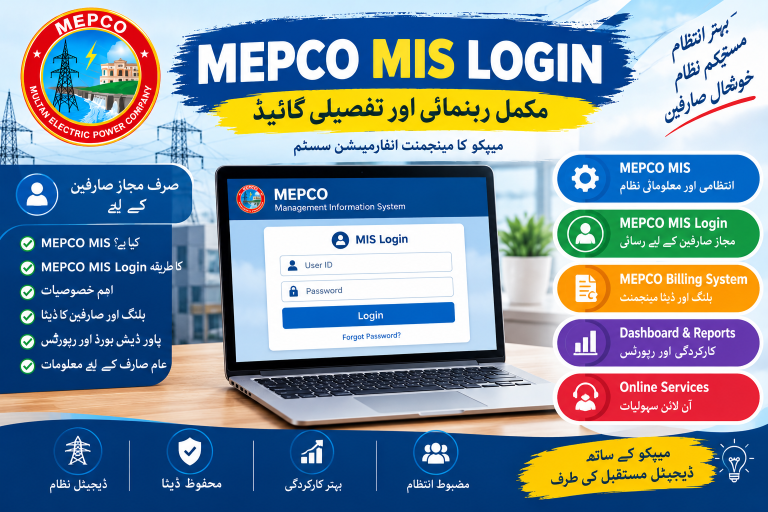
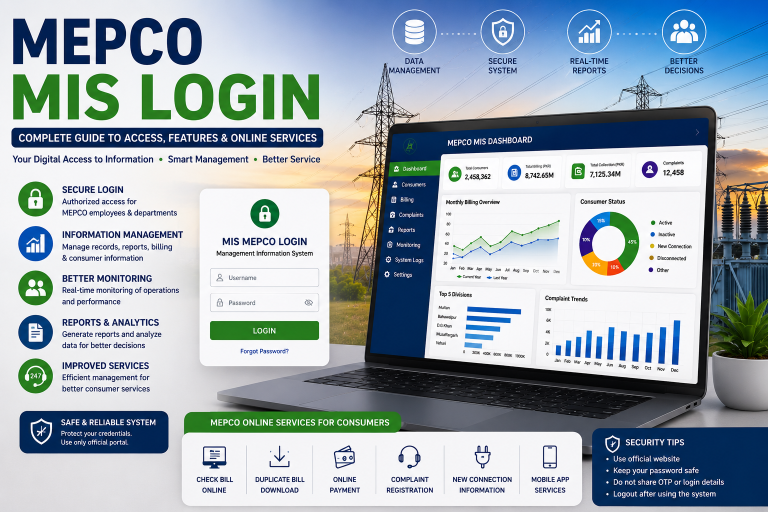
MEPCO MIS Login
Many users search online for terms such as:
- MEPCO MIS Login
- MEPCO MIS Portal
- MEPCO MIS Online
However, it is important to understand the difference between internal management systems and public consumer services.
Management and operational systems may contain sensitive information and functions intended only for authorized users.
Access to internal systems may depend on:
- User authorization
- Department
- Job role
- System permissions
- Security policies
For security reasons, users should never attempt to obtain unauthorized access to internal systems.
Can a Normal Consumer Use MEPCO MIS?
A normal electricity consumer generally does not need access to an internal management information system.
Most consumers only need access to public services such as:
- Checking electricity bills
- Downloading duplicate bills
- Checking payment information
- Registering complaints
- Getting new connection information
- Viewing electricity tariff information
These services are different from internal management and administrative systems.
MEPCO MIS vs Public Consumer Services
| MEPCO MIS | Public Consumer Services |
|---|---|
| Used for management and operational information | Used by electricity consumers |
| May include internal reports | Provides consumer-related services |
| Access may be restricted | Public services are generally easier to access |
| Used for performance monitoring | Used for checking bills and consumer information |
| Supports operational decision-making | Supports customer convenience |
It is important not to confuse an internal MIS with a public electricity bill checking website.
Benefits of MEPCO MIS
A well-managed information system can provide several benefits.
1. Better Decision-Making
Organized information can help management make more informed decisions.
2. Faster Reporting
Computerized information systems can make it easier to prepare operational and management reports.
3. Improved Billing Monitoring
Billing performance can be monitored across different periods and operational areas.
4. Better Recovery Monitoring
Outstanding amounts and collection performance can be tracked more effectively.
5. Improved Consumer Data Management
Consumer-related information can be organized and managed more efficiently.
6. Performance Analysis
Management can compare operational performance across different regions or departments.
7. Improved Operational Monitoring
Important performance indicators can be monitored through reports and dashboards.
MEPCO MIS and Customer Complaints
Customer complaint management is an important part of electricity distribution services.
Consumers may report issues related to:
- Power outages
- Meter problems
- Billing complaints
- Incorrect readings
- Connection problems
- Voltage issues
Digital information systems can help organize complaint-related information and support complaint monitoring.
A properly managed complaint system can help improve communication and service management.
MEPCO MIS and Digital Transformation
The electricity sector is increasingly adopting digital technologies.
Modern electricity distribution systems may use technologies such as:
- Smart meters
- Automated Meter Reading (AMR)
- Advanced Metering Infrastructure (AMI)
- Digital dashboards
- Data analytics
- Geographic Information Systems (GIS)
- Asset management systems
- Automated reporting
These technologies can generate large amounts of data.
Information management systems become increasingly important for processing and analyzing this information.
MEPCO MIS and Smart Metering
Traditional electricity meters require physical meter reading processes.
Modern systems can introduce more automated approaches.
Smart metering technologies may help with:
- Automated data collection
- Improved meter monitoring
- Faster information availability
- Better consumption analysis
- Improved operational monitoring
As digital systems expand, information integration becomes increasingly important.
MEPCO MIS and Asset Performance Management
Modern electricity companies are also moving toward advanced asset and performance management systems.
These systems may help monitor:
- Transformers
- Distribution equipment
- Energy flow
- Operational performance
- Recovery information
- Loss indicators
Advanced performance management can provide more detailed information about the electricity distribution network.
MEPCO MIS and Data Security
Information systems may contain important operational and consumer-related information.
For this reason, data security is essential.
Important security practices include:
- Authorized access
- Secure authentication
- Strong passwords
- Role-based permissions
- Data backup
- System monitoring
- Secure IT infrastructure
Consumers should also protect their personal information and use only trusted platforms.
Never share sensitive information with unknown websites or unauthorized individuals.
Common Misunderstandings About MEPCO MIS
Misunderstanding 1: Every Consumer Needs an MIS Login
This is not correct.
Most consumers do not need access to internal management systems.
Misunderstanding 2: MIS Is Only Used for Bill Checking
MIS can involve much more than checking electricity bills.
It can support information management, reporting, billing monitoring, recovery analysis, and operational performance management.
Misunderstanding 3: Every MEPCO-Related Website Is an MIS Portal
Not every website related to MEPCO is an internal management system.
Some websites only provide consumer services or information.
Future of MEPCO MIS
Digital technology is expected to become increasingly important in the electricity distribution sector.
Future systems may include:
- Advanced data analytics
- Smart metering
- Real-time monitoring
- Automated reporting
- Artificial intelligence-based analysis
- Asset performance management
- GIS integration
- Improved consumer service platforms
As electricity networks become more digital, organizations will need better systems to manage large amounts of information.
Frequently Asked Questions About MEPCO MIS
What does MEPCO MIS mean?
MEPCO MIS refers to the Management Information System environment associated with managing and organizing operational and management-related information.
What does MIS stand for?
MIS stands for Management Information System.
Can consumers access MEPCO MIS?
Normal consumers generally do not need access to internal management systems. Consumers should use official public services for bill checking and other consumer-related tasks.
Is MEPCO MIS the same as a bill checking website?
No. An internal management information system and a public consumer bill checking service are different.
What is the purpose of an MIS?
An MIS helps collect, organize, process, analyze, and present information for operational monitoring and decision-making.
Can MIS help with billing management?
Yes. Information systems can support the organization and monitoring of billing-related information.
Can MIS help monitor electricity recovery?
Information management and reporting systems can help monitor collection, outstanding amounts, and recovery performance.
Why is data security important in an MIS?
MIS systems may contain important operational and consumer-related information, so secure access and proper data protection are essential.
Final Words
MEPCO MIS represents the importance of Management Information Systems in managing operational and administrative information within a large electricity distribution environment.
Information related to consumers, billing, payments, recovery, losses, complaints, and operational performance can generate a large amount of data. A properly managed information system helps organize this data and convert it into useful reports and insights.
For ordinary electricity consumers, it is important to understand that internal management systems are different from public consumer services. Consumers generally need public services for tasks such as checking electricity bills, downloading duplicate bills, and accessing customer support.
As digital technologies such as smart meters, automated monitoring, advanced dashboards, and data analytics continue to develop, information management systems are likely to play an increasingly important role in the future of electricity distribution.